Finding Infrastructure & Renewable Energy Advisory Tenders in Africa

%20(1).svg)

Infrastructure and renewable energy advisory tenders in Africa include financial, legal, and technical mandates for PPP structuring and project bankability. These high-value consulting opportunities are often embedded within broad "Technical Assistance" or "Sector Reform" programs funded by international donors.
Why Finding Public Tenders for Energy & Infrastructure Consulting in Africa Is So Challenging ?
Africa is entering one of its most transformative decades for infrastructure and energy development. Major renewable and infrastructure programs are expanding across the continent, from utility-scale solar photovoltaic (PV) plants and battery storage facilities to transmission corridors, desalination PPPs, and off-grid electrification initiatives.
Behind every solar farm, grid-scale battery system, desalination plant, and industrial zone lies a critical early-stage component: the financial advisory and transaction structuring work that makes these projects bankable.
Yet, despite booming pipelines, finding the tenders for advisory roles remains one of the continent’s biggest challenges.
If you would like to learn more about identifying tender opportunities in Africa in the broader energy infrastructure sector — not only consulting opportunities — you can read our full article on the subject.
We also have a more specific article on engineering-related tenders in the African energy infrastructure sector, and we encourage you to read it as well.
A Fragmented and Opaque Tender Landscape
The African procurement ecosystem for advisory services is highly decentralized, requiring the simultaneous monitoring of 54 national portals and dozens of international financial institutions (IFIs).
Unlike the EU’s TED platform, Africa’s procurement ecosystem remains highly decentralized. Ministries, utilities, regional power pools, and international financial institutions each have their own publication channels — many of which are not indexed, searchable, or centralized.
In renewable energy especially, advisory tenders often appear buried inside broader sector or technical assistance notices. Instead of being listed clearly as “financial advisory for a solar project” or “PPP structuring for a battery storage program,” they may be hidden within:
- national procurement portals under generic “electrification” or “infrastructure support” categories
- donor-funded program pages focused on energy transition or climate resilience
- regional power market integration initiatives that do not explicitly reference renewables in the tender title
- capacity-building calls related to decentralized energy systems or grid modernization
As a result, a financial advisory tender linked to a large solar PV program, a battery storage feasibility study, or a green grid investment plan might appear under a title like technical assistance for energy sector reform or support for utility performance improvement — with no direct keyword indicating its renewable focus.
In other cases, tenders for renewable advisory services are published only through specialized institutional platforms, regional energy agencies, or local government websites rather than a unified procurement system. Without systematic monitoring across these scattered sources, even experienced market players can miss strategic opportunities.
Renewable energy advisory opportunities are dispersed across institutional silos, making structured monitoring essential.
Real-World Renewable & Infrastructure Advisory Examples
Recent 2025 mandates from the DBSA demonstrate that advisory tenders for renewable IPP programs follow strict, short-window procurement cycles, making real-time alerts a strategic necessity.
Several 2025 tenders illustrate the strategic nature of advisory roles in Africa’s renewable and infrastructure space, including financial, technical and legal transaction advisory mandates for utility-scale energy programs:
- Development Bank of Southern Africa (DBSA) : RFP041/2025 – Appointment of Financial Transaction Advisors for the Renewable Energy IPP Procurement Programme (Bid Window 7.5), briefing 08 May 2025, closing 19 May 2025. (Source: South Africa eTenders portal (May 2025)
- DBSA : RFP033/2025 – Appointment of Technical Transaction Advisors for the Renewable Energy IPP Procurement Programme (Bid Windows 7.5 & 8), published 01 Apr 2025, closing 22 Apr 2025. Source: EasyTenders procurement portal (April 2025)
- DBSA : RFP028/2025 – Legal Transaction Advisors for REIPPPP Bid Windows 7.5 & 8, published 11 Apr 2025.
Yet many of these notices only appear on local procurement portals, regional energy agency websites such as ECREEE, or donor-specific boards like the African Development Bank’s platform — with minimal cross-posting.
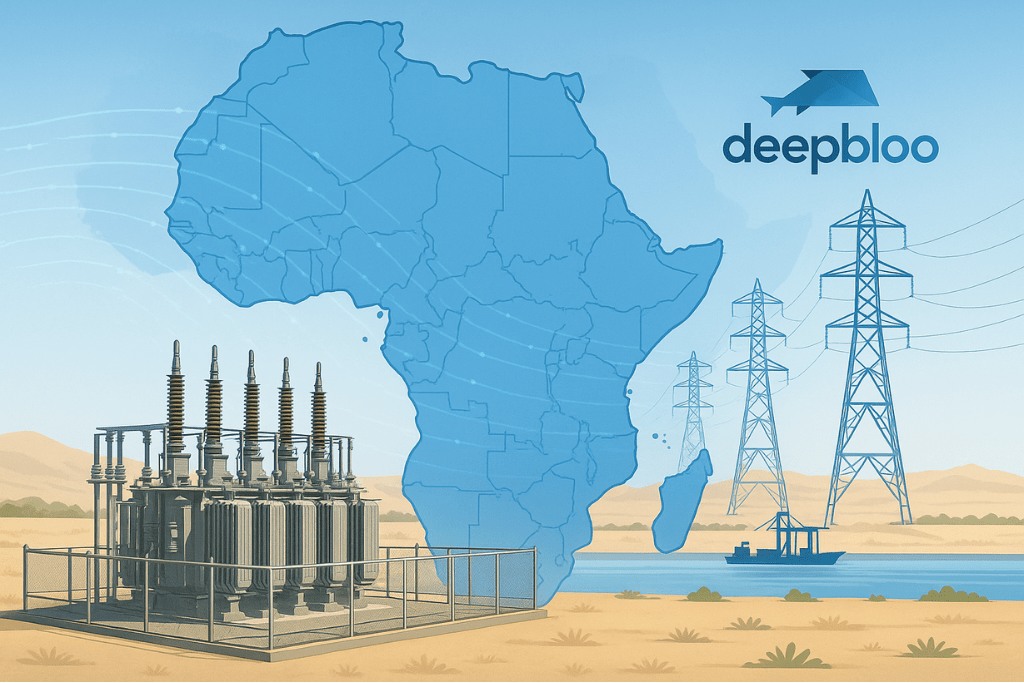
For specialized solar PV infrastructure and installation contracts, discover our analysis on identifying solar tenders in Africa.
Why Renewable Advisory Tenders Are Particularly Easy to Miss
Renewable energy tenders — especially for solar PV and storage — often lack clear labeling. A transaction advisory mandate can be hidden inside a notice titled:
- “Technical Assistance to National Electrification Strategy”
- “Electrification Program Support”
- “Transmission Master Plan Upgrade”
- “Regulatory Advisory for Energy Transition”
None of those titles explicitly mention solar, battery energy storage, or renewables — yet the content does.
This lack of standardization means the right keywords don't always help — the opportunity must be seen, not searched.
Digital Tender Intelligence Becomes Strategic
Semantic analysis is the only reliable method to identify infrastructure advisory leads buried within non-searchable PDF documents and broad electrification master plans.
Given that advisory opportunities may be published on government procurement portals, regional energy organizations, donor procurement systems, and sector-specific foundations, manual tender monitoring is no longer viable, even for large firms.
Digital tender aggregation platforms have become critical to:
- Monitor hundreds of sources daily
- Extract and scan non-OCR PDF opportunities
- Identify solar PV, BESS, grid, PPP, green financing keywords
- Track donor procurement (World Bank, AfDB, KfW, JICA, EU, etc.)
In emerging renewable markets, the ability to find tenders before others do is becoming a competitive differentiator as meaningful as technical expertise.
To discover how artificial intelligence is transforming the monitoring of tenders in France and internationally, feel free to read our dedicated article on the subject.
Deepbloo acts as a specialized radar for advisory firms by scanning the 'full text' of technical annexes. While traditional tools stop at the title, Deepbloo’s Semantic Intelligence identifies financial advisory requirements hidden inside 200-page 'Energy Transition' reports, providing a decisive advantage for M&A and legal consultants.
4 Steps to Capture Advisory Mandates in Africa
- Track the 'Upstream' Pipeline: Monitor General Procurement Notices (GPN) from the World Bank and AfDB to identify advisory needs 6 months before the RFP.
- Scan for 'Technical Assistance' (TA): Never ignore a TA notice; these are the primary vehicles for high-value legal and financial structuring mandates.
- Monitor Regional Energy Agencies: Follow ECREEE (West Africa) or SAPP (Southern Africa) for regional grid integration and cross-border project preparation leads.
- Use OCR-Powered Tools: Since many African tenders are published as scanned images, use a platform like Deepbloo to ensure no 'hidden' consulting lot is missed.
Conclusion: Visibility = Competitiveness
Africa’s infrastructure and renewable energy revolution is advancing — from solar PV and storage systems to green grids and urban utilities. But advisory tenders remain dispersed, inconsistently labeled, and fragmented across dozens of portals.
In Africa’s infrastructure and energy finance landscape, the hardest part of winning a tender isn’t writing the proposal —
it’s knowing the tender exists in the first place.
As renewable deployment accelerates, tender monitoring tools are no longer optional — they are essential intelligence infrastructure.
If you want to receive curated alerts on infrastructure and energy tenders across Africa — including advisory, transaction support, PPP structuring, project preparation and feasibility assignments — contact us or request a demo.
In summary:
Visibility is Profit: In the advisory market, missing the notice means missing the entire project lifecycle.
Beyond Keywords: Titles are misleading; the value is in the technical annexes.
The Intelligence Edge: Use Deepbloo to centralize thousands of sources and find the "useful signal" in the noise of African procurement.
FAQ
- What are transaction advisory tenders in Africa?
These are mandates for financial, legal, and technical experts to structure energy or infrastructure projects (like IPPs) and make them attractive to investors.
- Why are energy consulting tenders hard to find?
They are often published under vague titles like "Institutional Support" or "Capacity Building" on decentralized national or donor portals.
- Who funds the most infrastructure advisory in Africa?
Major donors like the World Bank, African Development Bank (AfDB), and European Union are the primary sources of funding for project preparation mandates.
- How to monitor African tenders in multiple languages?
Effective monitoring must cover English, French, and Portuguese sources, as West African (FR) and Lusophone (PT) markets hold significant project pipelines.


%20(1).jpg)


.jpeg)
.png)


.png)
.png)


.png)